
-
Product Description: It is a fabric-like surface formed by combining fibers much thinner than a millimeter through needle-punching and thermal treatment methods.
-
Advantageous Features:
-
Since it undergoes thermal treatment, it exhibits higher strength and less elongation at the same weight.
-
It requires less storage space.
-
It is easy to transport and roll out.
-
It is resistant to acids, alkalis, and microorganisms.
-
It is resistant to UV rays.
-
Its permeability perpendicular and parallel to the geotextile surface is high.
-
-
Areas of Use:
-
Highways
-
Tunnels and underground facilities
-
Sports fields
-
Metro
-
Agricultural areas
-
Garden terraces
-
Airports
-
Mining operation sites
-
Railways
-
Solid waste storage sites
-
Irrigation channels and ponds
-
Shore protection and insulation areas, etc.
-
As a carrier against cracking between insulation layers,
-
In the separation of water and heat insulation layers from each other,
-
For the protection of insulation, drainage of excess water, and preventing clogging by wrapping drainage pipes,
-
In preventing settlements and in many other application areas, Modew geotextiles are used.
-
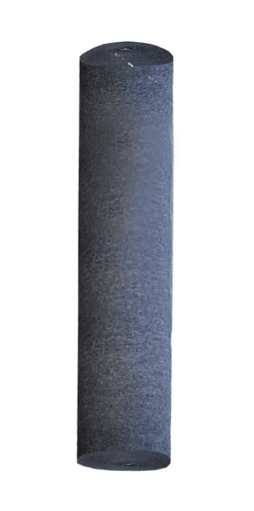
geotextile
Modew Geoteks Technical Specifications and Application Guide
Technical Specifications
-
The width is 2 meters, measured according to the TS EN 1849-1 method.
-
The thickness is 1.41 mm, based on the TS EN 1849-1 method.
-
The unit weight is $150\text{ gr/m}^2$, determined by the TS EN 1849-1 standard.
-
The tensile strength (Length / Width) is $110 / 125\text{ N} / 5\text{cm}$, in accordance with the TS EN 1231-2 method.
-
The elongation at break (Length / Width) is %55 / %40, measured using the TS EN 1231-2 method.
-
The static puncture resistance is 155 N, tested according to the ASTM D6241 method.
-
The color of the product is heather.
Application Guidelines
-
Geotextile Felts are specially woven in a modern factory equipped with state-of-the-art machinery using polypropylene, polyester, and polyamide depending on the place of use, purpose, and required technical properties.
-
Our products are distinguished from others by two main features: one is that they are woven using the needle-punching method, and the other is that they have undergone thermal treatment.
-
Needle-punching is the process of mixing combed and folded fibers vertically with each other using special notched needles while they remain in a horizontal position.
-
Thanks to our wide machinery park, products with very high resistance are successfully offered for sale by performing needle-punching from both the top and the bottom.
-
Thermal treatment, on the other hand, is the fixing of fibers exhibiting thermoplastic properties at a specific temperature and pressure using a hot calender.