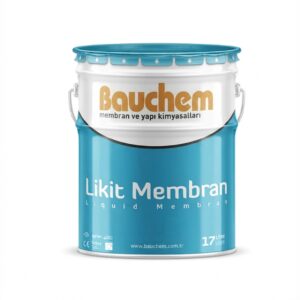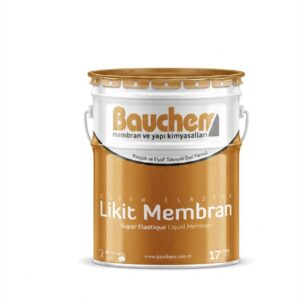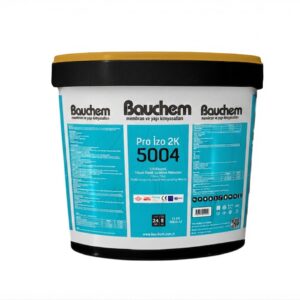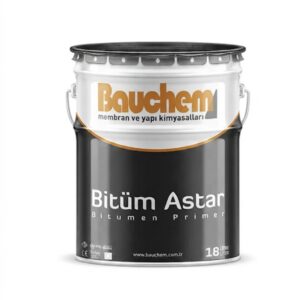
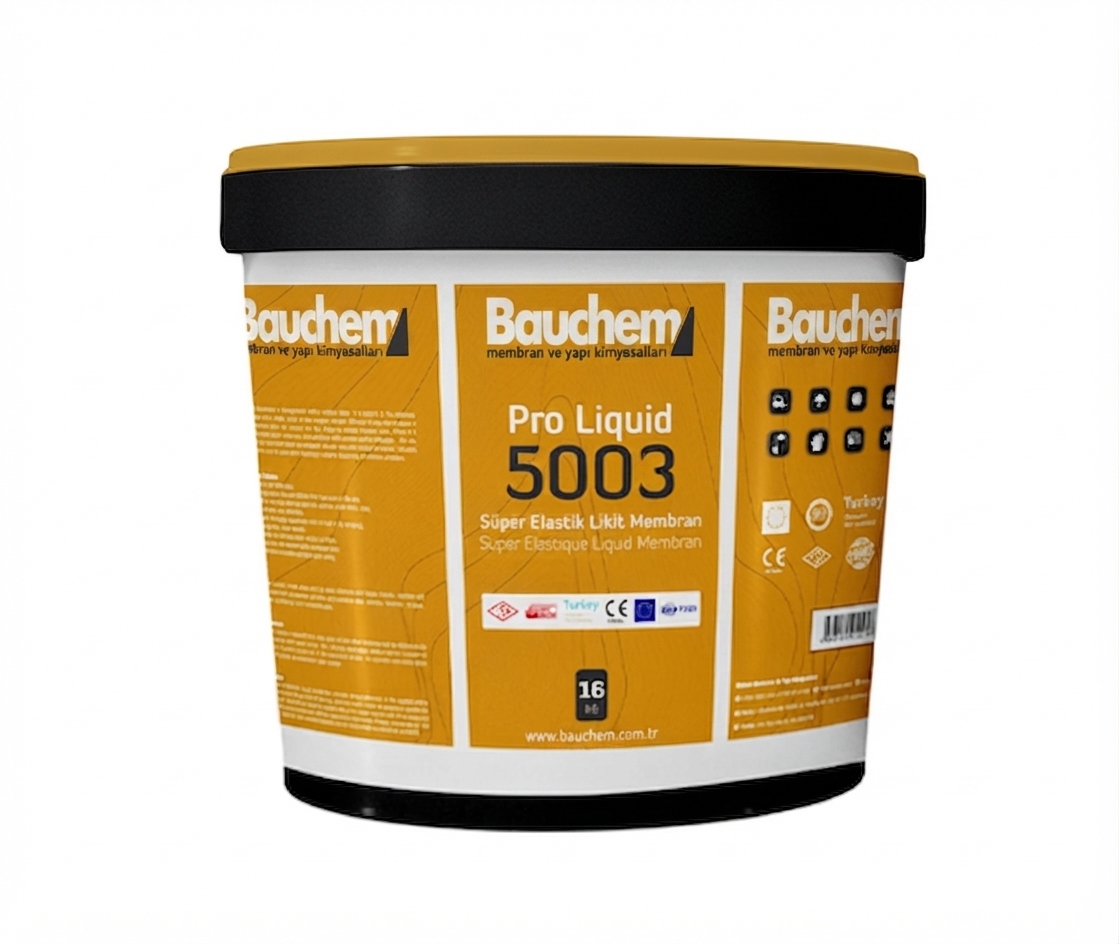
Pro Liquid 5003

Pro Liquid 5003 Surface Preparation and Application Guide

Surface Preparation

  • Ensure the application surface is dry and clean, free from dust, dirt, rust, and oil, with any loose parts scraped off.

  • Round off areas prone to cracking—such as sharp points and horizontal/vertical joint lines—by creating a chamfer using ProEdit 5045 repair mortar or chamfer tape.

  • Fill large pores and cracks using ProEdit 5045 K repair mortar.

Application

  • Apply ProLiquid 5003 exclusively to the side of the area that comes into contact with water.

  • The product is ready to use and can be applied directly using a brush, roller, trowel, or low-pressure sprayer without requiring any heating or thinning.

  • Apply in a minimum of two coats.

  • Use ProPrimer 5002 as a primer on non-metal surfaces, and ProLiquid 5003 on metal surfaces, to ensure strong adhesion, remove dust, and extend the lifespan of the application.

  • While ProPrimer 5002 dries in a short time like approximately 2 hours, allow a waiting period of one day between coats when applying multiple layers.

  • For higher pressure resistance, reinforce the application using carriers such as glass tulle, felt, mesh, or insulation fabric.

  • On roofs continuously exposed to weather conditions and not walked upon, apply an aluminum pigment-additive coating over the material after application to provide protection from the sun and an aesthetic appearance.

  • ProLiquid 5003 is a ready-to-use elastomeric liquid membrane containing bitumen-rubber and solvent-based, used against water and moisture.

  • After the evaporation of the solvent in its structure, it adheres strongly to the applied surface and forms a water-resistant elastic film layer.

Advantageous Features

  • It is easily applicable and ready to use.

  • It forms a seamless and continuous insulation layer.

  • It is elastic.

  • It can be applied cold, requiring no heating or thinning.

  • It dries quickly.

  • It can be used in areas where high water resistance is required, together with carriers such as geotextile felt and mesh.

Areas of Use

  • Used in foundations against ground moisture and leaks.

  • Used in retaining and curtain walls, galleries, drainage, and foundation piles.

  • Used in terrace roofs, balconies, water channels, hidden gutters, bridges, and viaducts, provided that they remain under a coating and are protected.

  • Used in the exterior insulation of pools against water and moisture.